

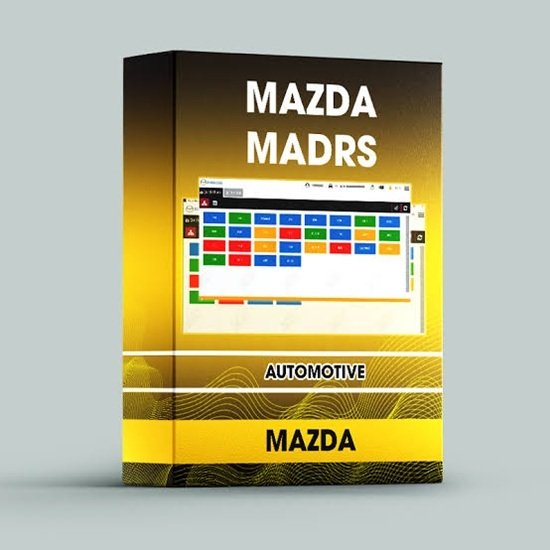
Mazda MDARS Diagnostic and Repair Software
MDARS is Mazda’s cloud-connected diagnostic and programming application for supported vehicles.
Verified MDARS Application Guide
Mazda’s current US service page lists Mazda3 2019+, CX-30 2020+, CX-9 2021–2023, CX-5 2021–2025, MX-30 2022–2024, CX-50 2023+, CX-90 2024+, CX-70 2025+, plus listed Mazda2, CX-3 and MX-5 applications. The 2026 CX-5 uses the separate MDARS II system. Market, VIN and installed vehicle systems must be checked before selecting software.
Manufacturer coverage reference. Subscription permissions, interface compatibility and any security-service eligibility require confirmation.
It specifically serves 7th-generation and newer Mazda vehicles, which transitioned to a cloud-dependent architecture starting with the 2019 Mazda3. For older platforms (6th-generation and prior), Mazda still uses its legacy software, Mazda IDS (Integrated Diagnostic System).
Key Capabilities and Compatibility
MDARS allows independent workshops and dealership technicians to completely manage modern vehicular software setups.
- Complete Vehicle Access: Performs full ECU flashing, advanced guided trouble-code (DTC) diagnostics, live PID data monitoring, and parameter adaptations.
- Supported Models: Built for 7th-generation models such as the Mazda3 (2019+), CX-30 (2020+), MX-30, CX-50, CX-60, CX-70, CX-80, and CX-90.
- Evolution (MDARS II): The system has expanded into MDARS II, introduced to handle advanced architectures on contemporary models like the newest CX-5 iterations.
Platform Mechanics & Licensing
Unlike purely offline legacy tools, MDARS relies heavily on cloud communication, meaning you download the core program launcher (often built on a Linux/Chromium baseline) but require an active internet connection to download calibration files straight from Mazda’s central servers.
- Unified License: Purchasing a standard Mazda Service Info IDS software subscription grants access to both IDS and MDARS simultaneously at no added cost.
- Pass-Through Hardware: It operates via factory vehicle communication interfaces like the Mazda VCM II / VCM III, the Denso DST-010-B, or certified third-party J2534 pass-through devices (such as the VCX SE).
If you are setting up a diagnostic environment, let me know if you need to know the PC hardware requirements, which specific J2534 adapter models are fully certified, or the steps to register an aftermarket account on Mazda’s service portal.
Be the first to review “OEM Mazda MDARS Mazda Diagnostic and Repair Software”
Related products



Reviews
There are no reviews yet.