

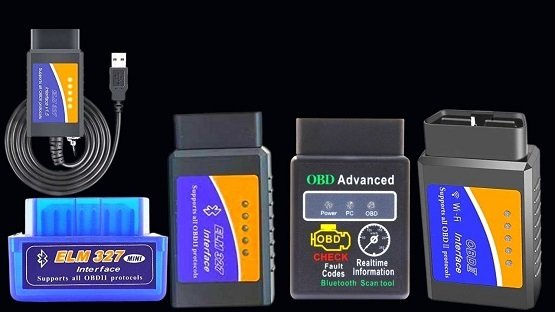

ELM327 adapters are compatible with almost all vehicles manufactured since 1996 in the USA and 2001 in Europe (gasoline) or 2004 (diesel). They work with any vehicle that adheres to the OBD-II standard, which includes five major communication protocols like CAN, ISO 9141-2, and KWP2000.
Compatible Car Brands
According to Klavkarr and Geewiz, the following major brands and their post-1996 models are generally compatible:
American: Ford, GM (Chevrolet, Buick, Cadillac, GMC), Chrysler, Dodge, Jeep, RAM, Tesla (requires adapter).
European: BMW, Volkswagen, Audi, Mercedes-Benz, Volvo, Fiat, Renault, Peugeot, Citroën, Land Rover, Porsche, Skoda.
Asian: Toyota (including Prius), Honda, Nissan, Mazda, Hyundai, Kia, Mitsubishi, Subaru, Suzuki, Lexus.
Motorcycle Compatibility
Modern motorcycles manufactured after 2010 (especially in Europe due to emissions regulations) are often OBD-II compliant and can use ELM327 scanners.
Required Equipment: Most bikes use proprietary diagnostic ports rather than the standard 16-pin D-shaped car connector. You will typically need a brand-specific adapter cable (e.g., a 4-pin or 6-pin to 16-pin OBD-II adapter).
Compatible Bike Brands: BMW Moto, Ducati, KTM, Kawasaki, Triumph, Yamaha, and Piaggio.
Key Compatibility Requirements
OBD-II Port: The vehicle must have a physical 16-pin diagnostic connector, usually located under the dashboard.
Protocol Support: A genuine ELM327 chip supports all five OBD-II protocols (CAN, ISO 9141, KWP2000, J1850 PWM, and J1850 VPW).
Device OS:
Bluetooth 2.0/3.0 adapters are generally for Android only.
Wi-Fi or Bluetooth 4.0 (BLE) versions are required for iOS (iPhone/iPad).
Software: The adapter must be paired with compatible apps such as Torque Pro, Car Scanner ELM OBD2, or OBD Auto Doctor.
Would you like to know which specific adapter cable is needed for your bike model?
If your vehicle is in this list but still, when you try to communicate with the vehicle ECU, it indicates that it is not compatible do not lose hope yet. It is very possible that this SOLUTION works for you.
This database has not 100% of accuracy, maybe 95% or more. Maybe a vehicle can be in this list and not be compatible with your ELM327, with more reason if your ELM327 is 2.1 version. This list was created with ELM327 1.5 version for several years.
Remember that the ELM327 2.1 version is NOT compatible with SAE J1850 communication protocols (neither PWM nor VPN). If you are interested in this device you should know that although the vehicle appears in the database you should be aware of the protocol used. If the protocol is one of those mentioned, the vehicle’s ECU will NOT be compatible with ELM327 version 2.1.
The OBD2 test modes are common to all vehicles of different manufacturers. What this means is that no matter what vehicle is being tested or what OBD2 diagnostic equipment is being used, all the tests you need do will be done in the same way for any vehicle from any manufacturer.
Mode 1
Parameter identification (PID) is the access to real time data of analog or digital values of outputs and inputs to the ECU. This mode is also called data flow. In this mode we can see, for example, the engine temperature, the voltage generated by a lambda probe, etc.
Mode 2
Access to frozen data table. This is a very useful function of OBD2 because the ECU takes a sample of all emission-related values at the exact moment a fault occurs. In this way, when recovering this data, we will be able to know the exact conditions in which that failure occurred. There is only one data frame that corresponds to the first detected fault.
Mode 3
This mode allows all DTC to be read from the ECU memory.
Mode 4
With this mode you can delete all codes stored in the PCM, including the DTCs and the frozen data box.
Mode 5
This mode returns the results of the tests performed to the oxygen sensors to determine their operation and the efficiency of the catalytic converter.
Mode 6
This mode allows to obtain the results of all on-board tests.
Mode 7
This mode allows all remaining DTC to be read from the ECU memory.
Mode 8
This mode allows you to test the actuators. With this function you can activate and deactivate actuators such as fuel pumps, idle valve, etc.

Reviews
There are no reviews yet.