



The Automotive CAN BUS (Controller Area Network) is a robust communication protocol that acts as the “nervous system” of a vehicle. It allows various electronic parts to exchange information quickly and reliably without needing a central “host” computer.
How CAN BUS Works
Modern cars contain dozens of Electronic Control Units (ECUs), such as the engine control module, airbags, and anti-lock brakes. Instead of connecting every part to every other part with individual wires, they all connect to a single, shared two-wire “highway”.
Broadcast Communication: When a part has information (like the current engine speed), it “broadcasts” a message onto the bus. Every other component on the network receives this message simultaneously and decides if the information is relevant to its function.
Priority System (Arbitration): If two components try to speak at the exact same time, the system uses “arbitration” to decide which message gets through first. Messages with a lower Identifier (ID) number are considered more critical and always win, while less important ones wait for a gap.
Differential Signaling: To survive the extreme electrical noise of a car engine, the system uses two wires (CAN High and CAN Low) that carry opposite voltages. The receiver only looks at the difference between these voltages, which filters out external interference.
Error Handling: The protocol has built-in self-checking. If a message is corrupted, the system detects it via a Cyclic Redundancy Check (CRC) and immediately requests a resend.
Key Benefits
Reduced Weight and Cost: By replacing miles of individual wires with a single two-wire pair, vehicles can be up to 20 kg lighter, improving fuel efficiency.
Robustness: It is designed to be extremely reliable in harsh environments where vibration and electrical noise would crash standard consumer networks.
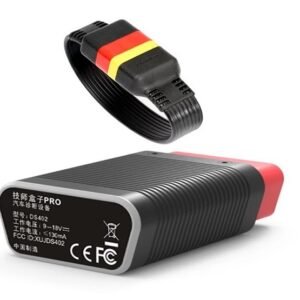
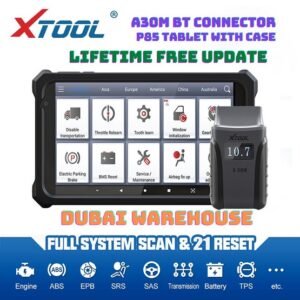
Centralized Diagnostics: Mechanics can plug into a single point (the OBD-II port) to see data from every component on the network at once.
Common Versions
Version Max Speed Max Payload Use Case
Classical CAN 1 Mbps 8 Bytes Standard vehicle communications
CAN FD 8 Mbps 64 Bytes Modern high-performance systems and sensor data
CAN XL 20 Mbps 2,048 Bytes Bridging the gap with Automotive Ethernet
Would you like to know more about how to decode specific messages from your car using an OBD-II scanner?
Reviews
There are no reviews yet.